“dy·nam·ics
/dīˈnamiks/noun
The varying levels of volume of sound in different parts of a musical performance.”
Google
When I first started playing the piano and the flute, I noticed that I could increase and decrease the volume of a note depending on how I played it. One thing I learned as a kid is that dynamics play a significant role in songs.
Dynamics help convey the song’s and composer’s emotions and expressions. Take an example like the Star Wars song. It is often played at a very loud volume because the composer, John Williams, wanted the audience to feel excited. The dynamics of the song makes Star Wars seem powerful and brave, not weak and timid.
In my experience, learning to play dynamics effectively takes time and plenty of experimentation.
I tried to make this guide as helpful as possible while also acknowledging the fact that you won’t be a dynamic master five minutes after reading this blog.
With that in mind, let’s get started!
The Basics
Before playing and learning how to play dynamics, you need to know the basic foundations.
Dynamics refers to the volume of the music that should be played. They are shown in letters which stand for Italian words in dynamic levels.
On sheet music, there are signs indicating what kind of dynamic you need to play. Here is a chart below of the basic dynamics you might run into.
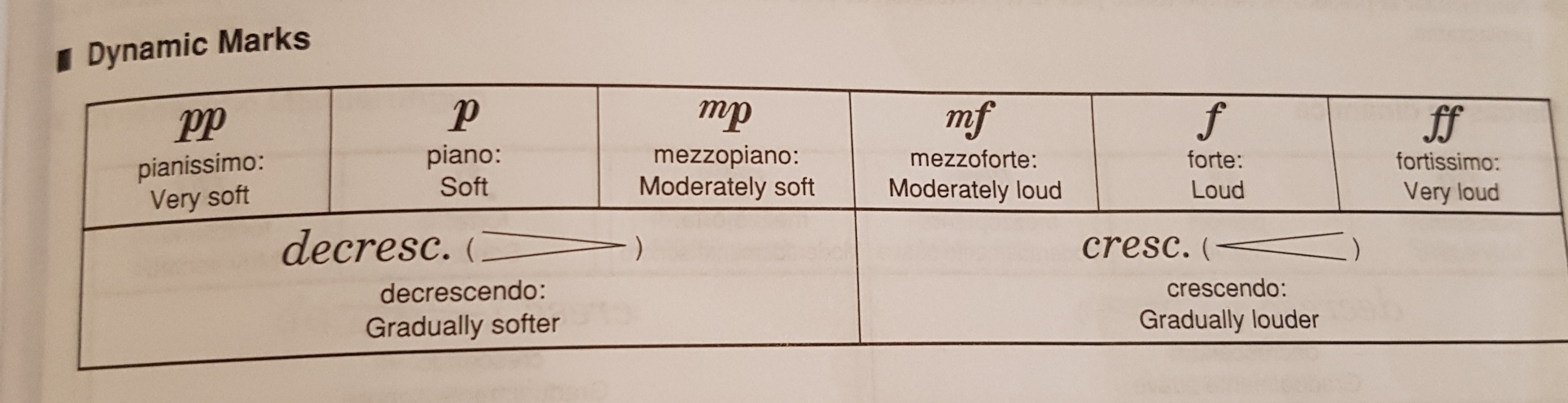
Other dynamic markings would be the crescendo and decrescendo. It can be indicated in cursive words or < and >. A crescendo means gradually louder, and decrescendo is the opposite. It gets gradually softer.
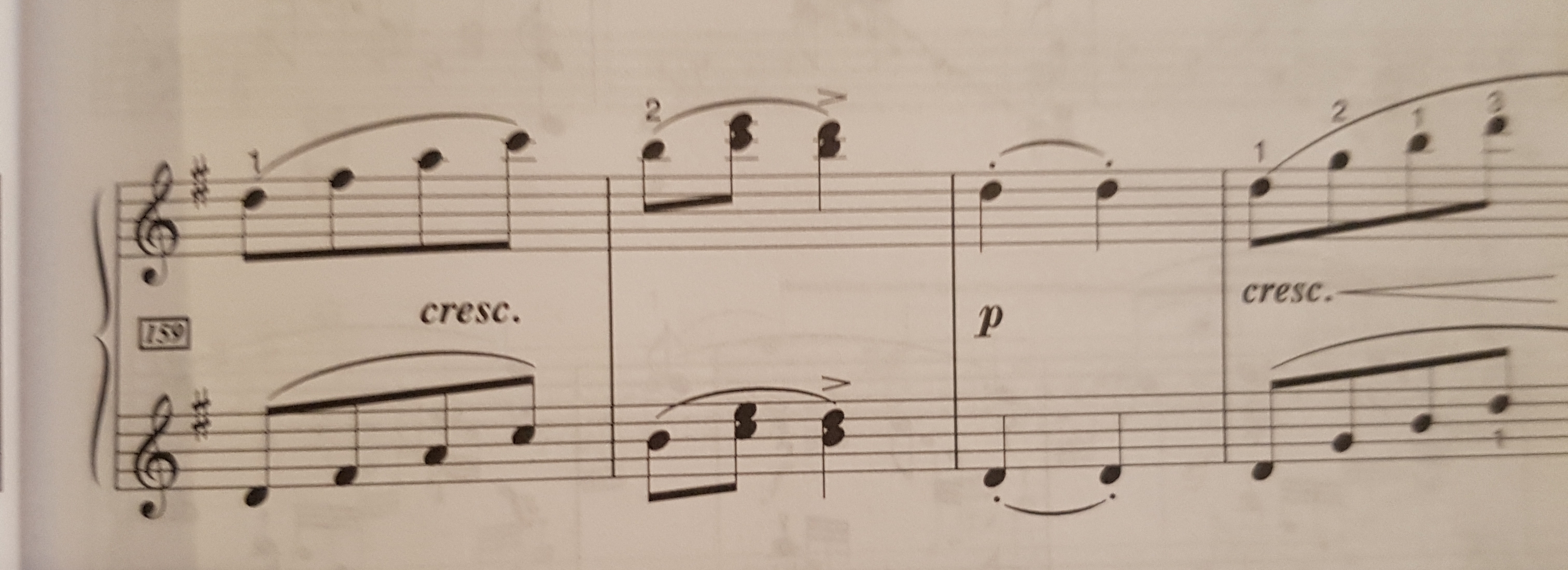
If you are playing music that has a p and later an f, that’s implying an abrupt change. You’re going from quiet to loud with little to no transition. It is the same with f to p.
If there is a crescendo or decrescendo, there is a transition. For example, if there was a decrescendo from f to p, the melody would get softer, note by note.
Dynamics on the Piano
Trying to play dynamics on the piano is a matter of how fast and firmly you press down a key. Quicker and firmer means a louder note, while a quieter note is considerably slower and softer.
Over the years of playing and recitals, one thing I’ve noticed is that some people tend to lean more quietly, and some people tend to play loudly. Where you fall on this spectrum is good to know because you can work on your weaker area.
For instance, I tend to be a heavy-handed player. I have a hard time with the pianos, but I can play fortissimos easily. That’s why I remember exactly to hold back when I’m playing and find greater depth and range in the quieter volumes.
Experiment with the way you play keys on the piano and practice! If there was one thing you should know, practice makes perfect.
On the Flute
For me, dynamics on the flute can be difficult. I tend to blow harder and then run out of air. Playing softer gives me an airy tone, which is bad and you do not want.
Practicing how to blow softer and harder on the flute is something that also comes with practice and experimentation.
A tip I use for playing softer while still maintaining a good tone is to make a “peu” sound instead of the usual “too” and “poo” sounds.
Dynamics is one of those things you need to practice and experiment. Mastering it comes with practice and hard work, like any other creative process.
Experiment, practice, and most importantly, have fun!

 My Experience with Music
Dynamics is so important! I learned in the Star Wars theme song, dynamics is used by John Williams to make the audience feel excited, why it is played loud. I noticed two words in this blog and thought to myself, “what the heck does this even mean” crescendo and decrescendo. Instead of just teaching us how it can be used, Teresa explained what the terms meant. Now I know, crescendo means gradually louder and decrescendo means softer. When I learn my first instrument, I need to master playing softer and harder. Using “peu” to help me guide.
LikeLike