When I first got my fingers on the piano, I didn’t even bother trying to read sheet music. The first song I played was “happy birthday”. I first learned songs by ear and looked up YouTube tutorials on how to play songs, such as Fur Elise.
Learning how to read sheet music was be hard at first, but after lots of practice, reading sheet music is something I could do in my sleep. There are many tips I have learned throughout the years and I am willing to share them with you guys!
The Grand Staff
A staff is a set of 5 horizontal lines and four spaces. In musical notation, the staff represents different pitches, called notes.
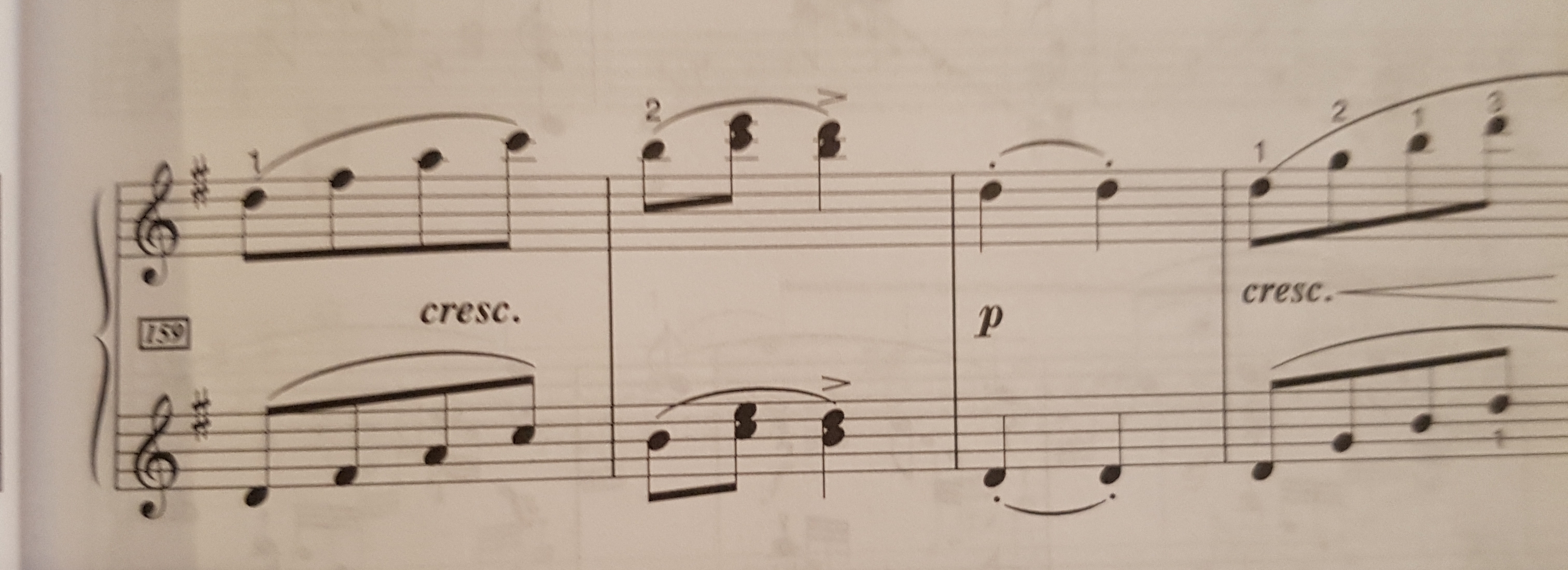
The grand staff is a set of two staffs connected with a bracket that play together at the same time. It is often used for keyboard instruments such as the piano.
Note Reading
I learned as a kid that trying to read sheet music seems to have two sections. One part is looking at the sheet and identifying the notes, but the other part find them on the keyboard. First thing is to first identify notes.
In music, we use 7 letters of the alphabet, ABCDEFG. We use ABCDEFG to represent each note. Each pitch or key is a letter, either ABCDEFG. Since the piano has lots of keys, we repeat the alphabet.
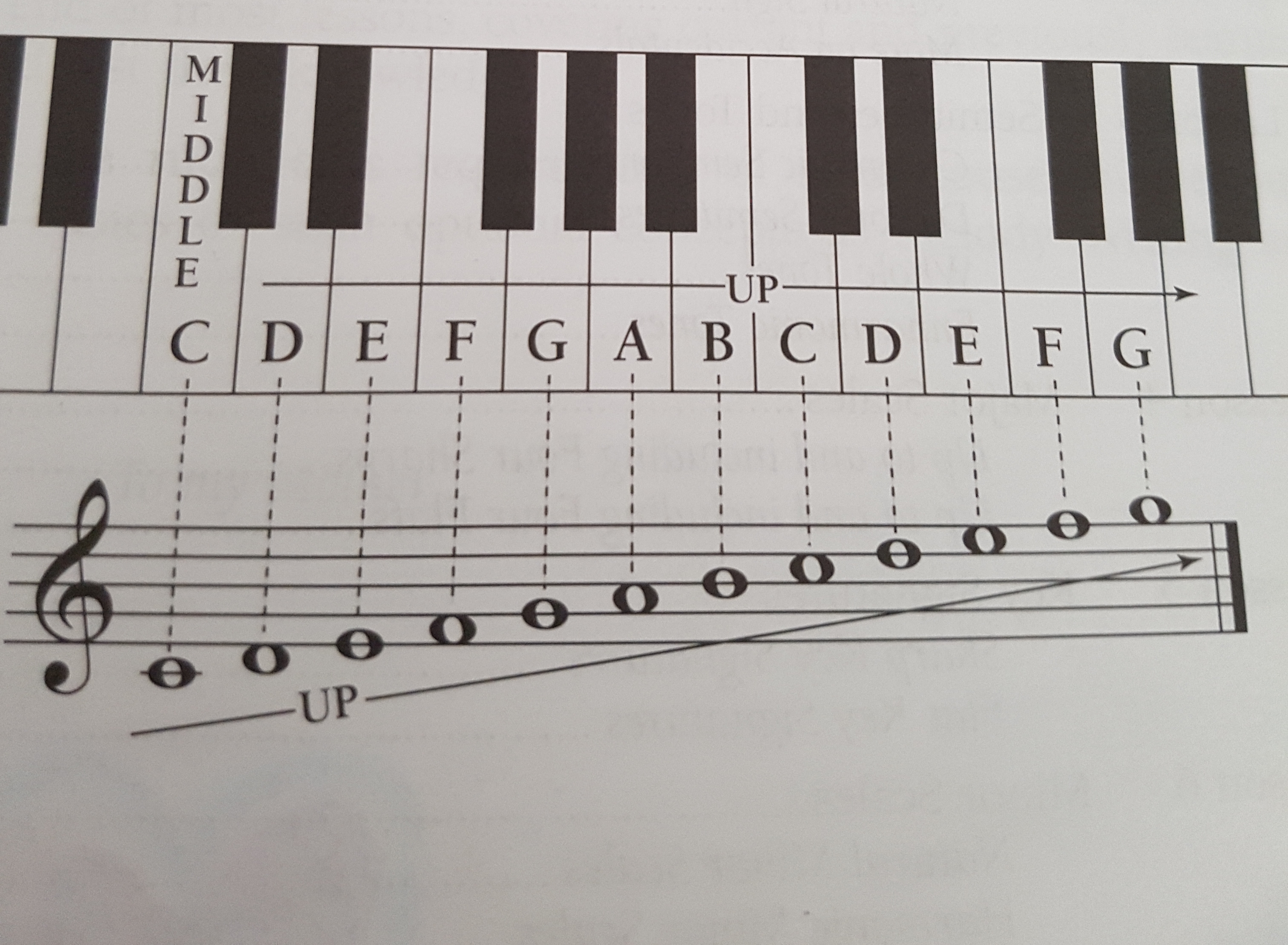
Each place on the staff represents a note and a letter. I use sayings to help memorize which place on the staff is each note.
For the notes under and above the staff, we use something called “ledger lines”. I go up or down the scale, usually counting up or down from the lines of staff.
Clefs
In music, the symbol placed at the beginning of a staff is called a clef. Its purpose is to tell the player the pitch of the notes on the staff.
The piano always use these 2 clefs: treble and bass.
The Treble Clef
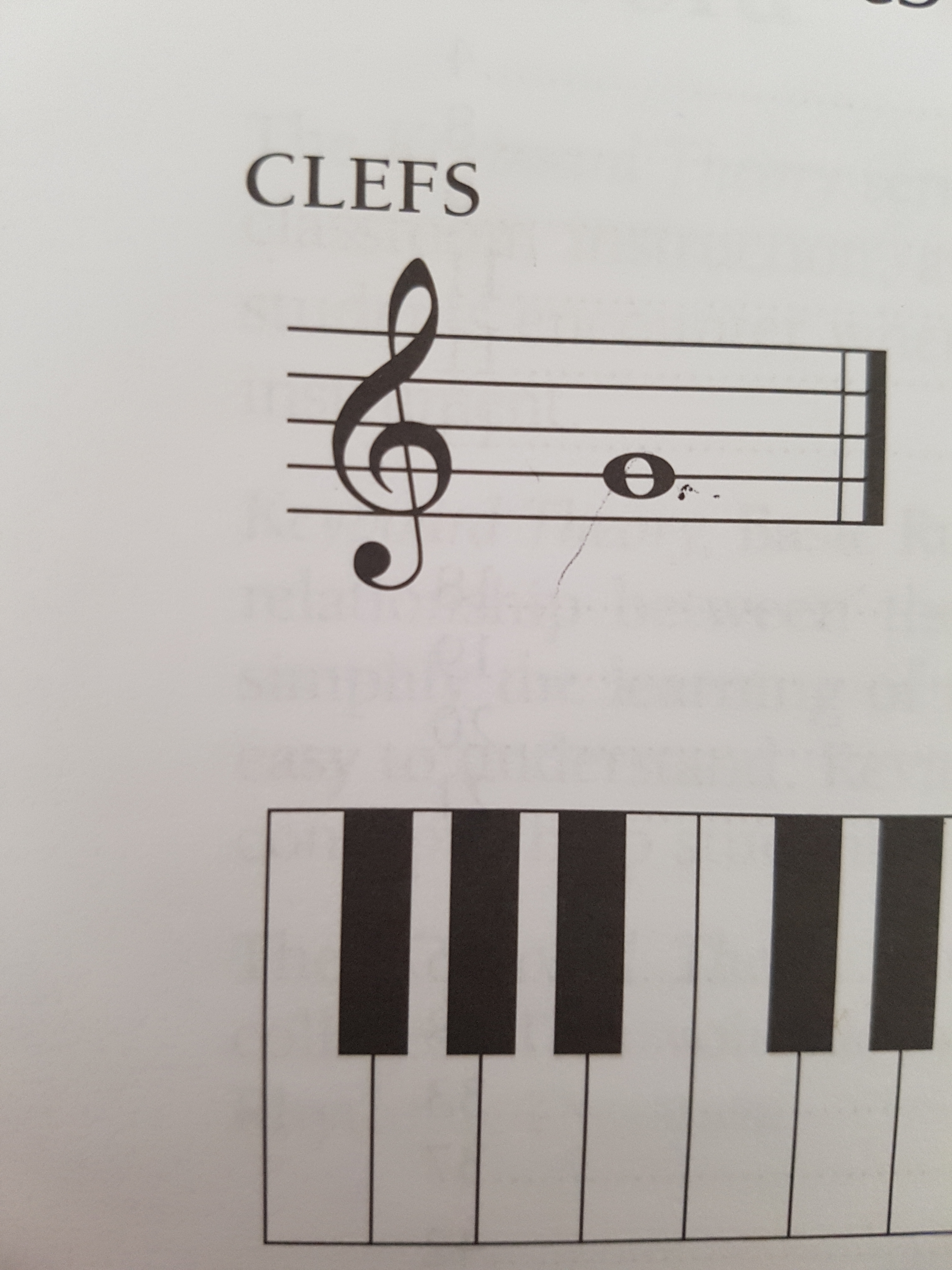
The treble clef is usually for the notes higher than middle C and is often the clef for the right hand. Another name for the treble clef is the G clef.
For the lines in the treble clef I use (E)very (G)ood (B)oy (D)eserves (F)udge. For spaces, I use FACE.
The Bass Clef
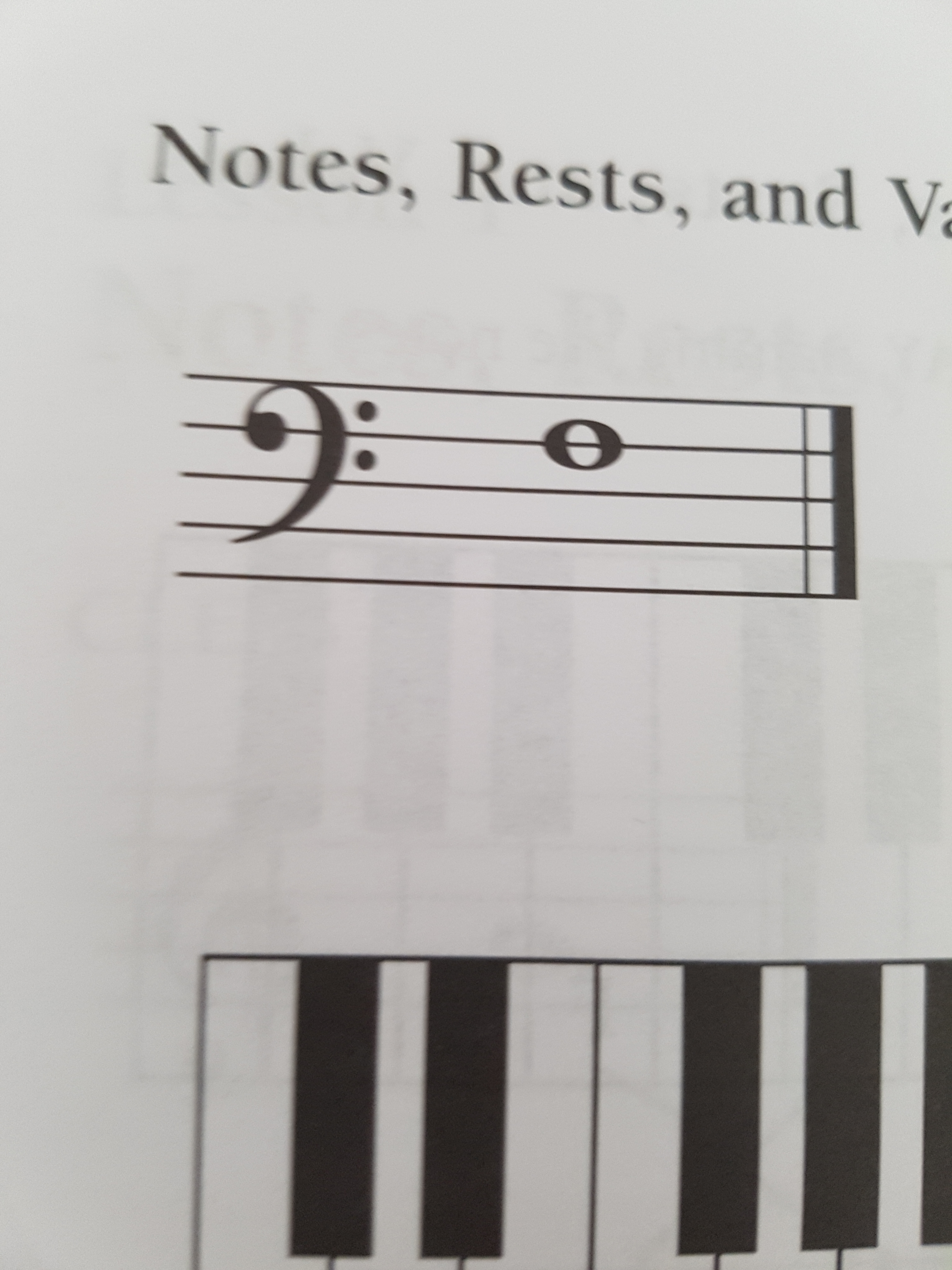
The bass clef is usually for the notes lower than middle C and is often the clef for the left hand. Another name for the bass clef is the F clef. A trick I use to remember this is that the two dots on the right is surrounding the line F.
For the lines, I use the saying (G)ood (B)oys (D)eserve (F)udge (A)lways. You can also use (G)reat (B)ig (D)ucks (F)ly (A)way. For spaces, I use (A)ll (C)ows (E)at (G)rass.
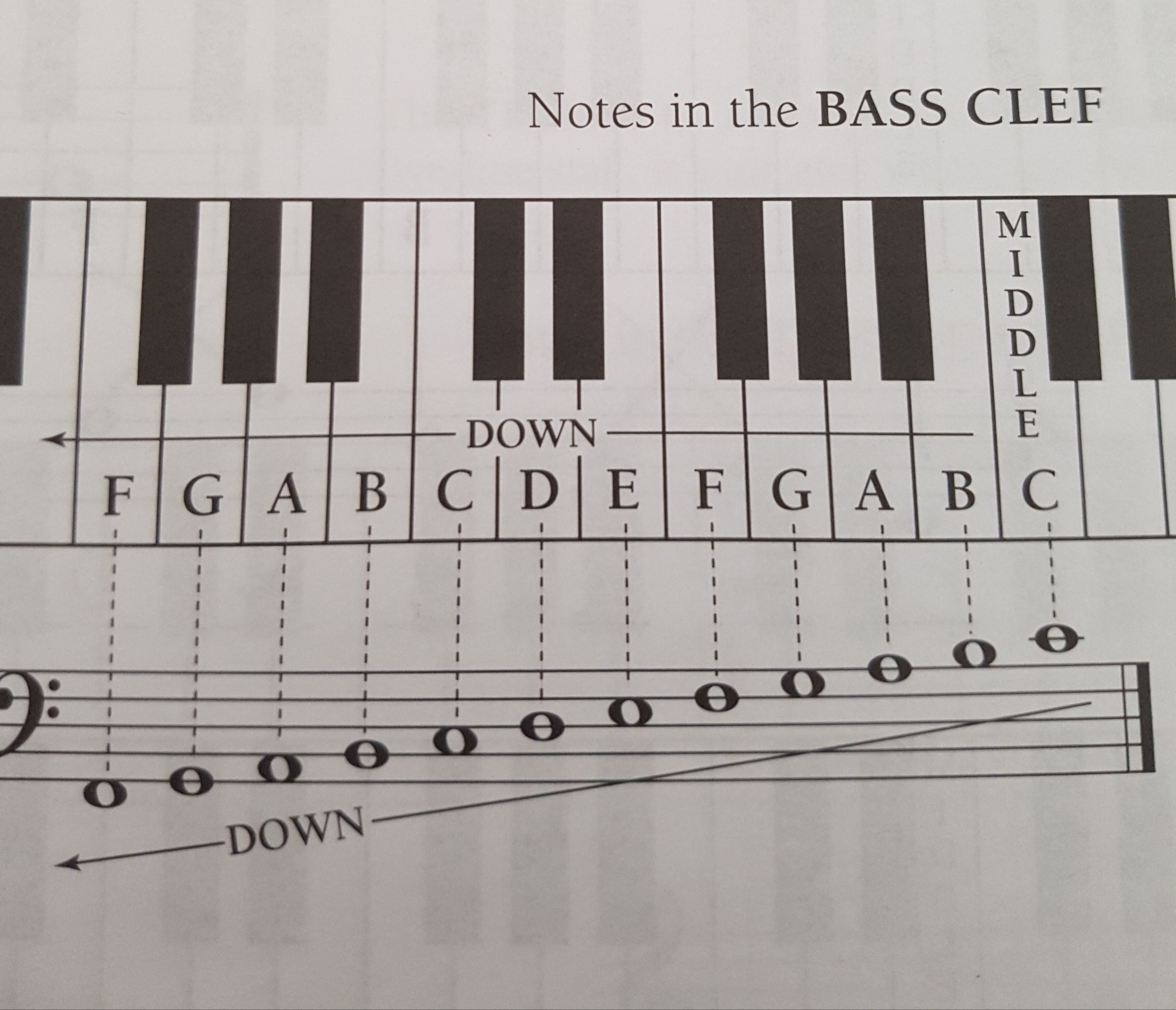
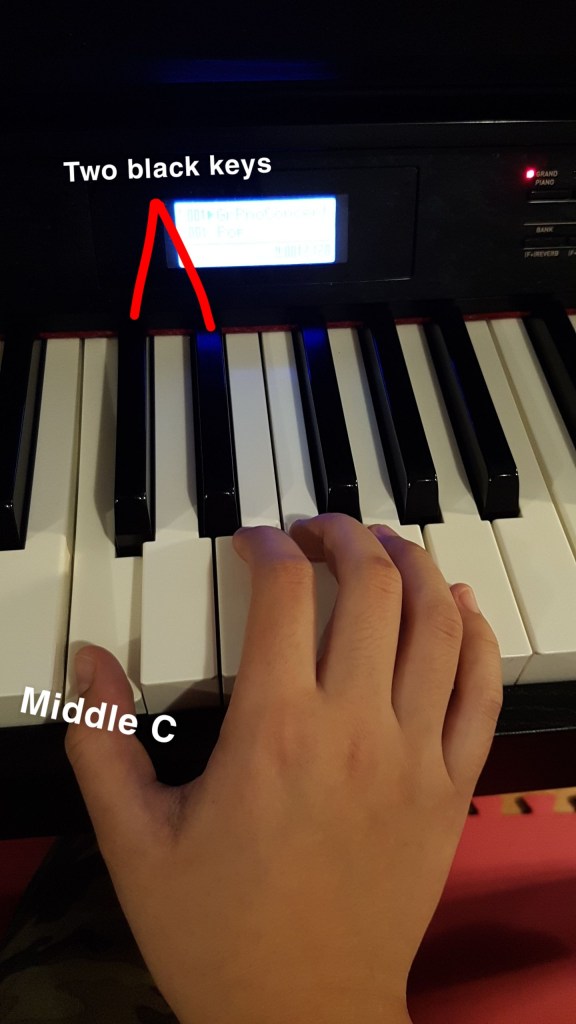
You can find each of the notes of the staff using the “guide note” middle C and going up (if the note is higher than C) or moving down. (lower than middle C) Middle C on the staff is the first ledger line below the staff on the treble clef. On the bass clef, it is the first ledger line above the staff.
Playing the Grand Staff
When I talk to people who don’t play the piano, I usually get asked:
How do you read both hands at once? Or how do you keep track of which hand plays what?
This is one of the pianist’s toughest challenges. Most instruments require that you will only learn one clef, however since pianos are capable of making sounds with both hands, you have to read two lines of staff.
Perhaps the issue people have here is that they are constantly trying to do too much too quickly. At their level, they try to read music that is far too difficult to process. I’ve done it myself and I have seen it all during teaching.
When I first started playing, I got frustrated. Indeed the piece I was learning were readable hands separately, though playing it hands together became a burden.
So then, even at a painstakingly slow pace, I read one note at a time, “slicing” the piece together.
This really helped me learn songs and play hands together. Playing the song line by line or measure by measure made my playing improve significantly.
Reading sheet music is very important when learning new songs and everything in music takes practice and hard work. Thanks for reading my blog!
 My Experience with Music